


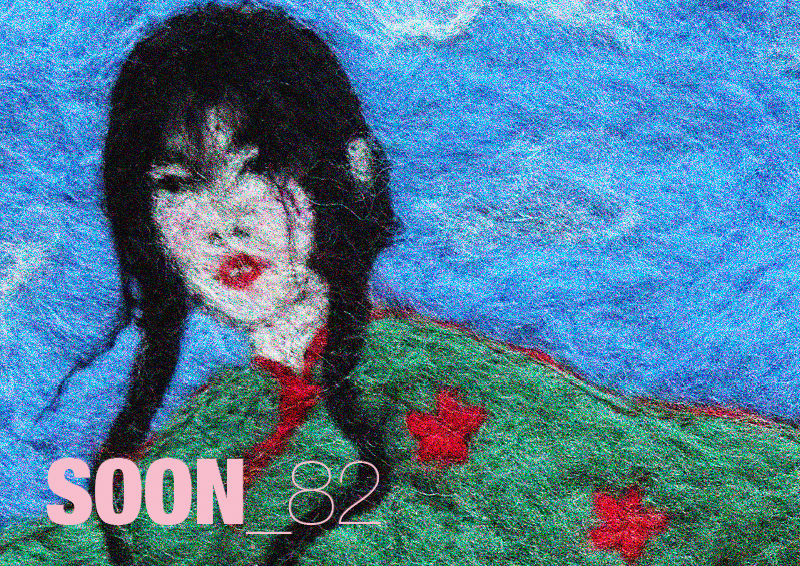
SOON_82
Zuzanna Mrozowska
Three Riddles from Turandot
2 August – 7 September 2025
In the SOON_82 project, I juxtaposed a sculpture of a snake, created as part of my BA diploma I am the disease of men(2024), with a new triptych inspired by the three riddles from the opera Turandot.
All the objects enter into a coherent dialogue—not only visual, but also symbolic and narrative. My diploma project addressed female anger directed against patriarchy. Its central element was the snake—a symbol of deceit and sin in Judeo-Christian culture. I portrayed it as a defeated and wounded creature, a victim of someone else’s fury. It was an exercise in reversing roles: the woman becomes the one who strikes the blow—like Judith with the Head of Holofernes by Artemisia Gentileschi. The work draws on biblical motifs and symbolism while maintaining a decorative form.
The opera Turandot, set in a fairy-tale vision of China, employs a simple narrative enriched with dramatic, emotional, and symbolic layers. The starting point for the triptych were the three riddles posed by the titular heroine to her suitors:
“What is reborn every night and dies every dawn?” — Hope
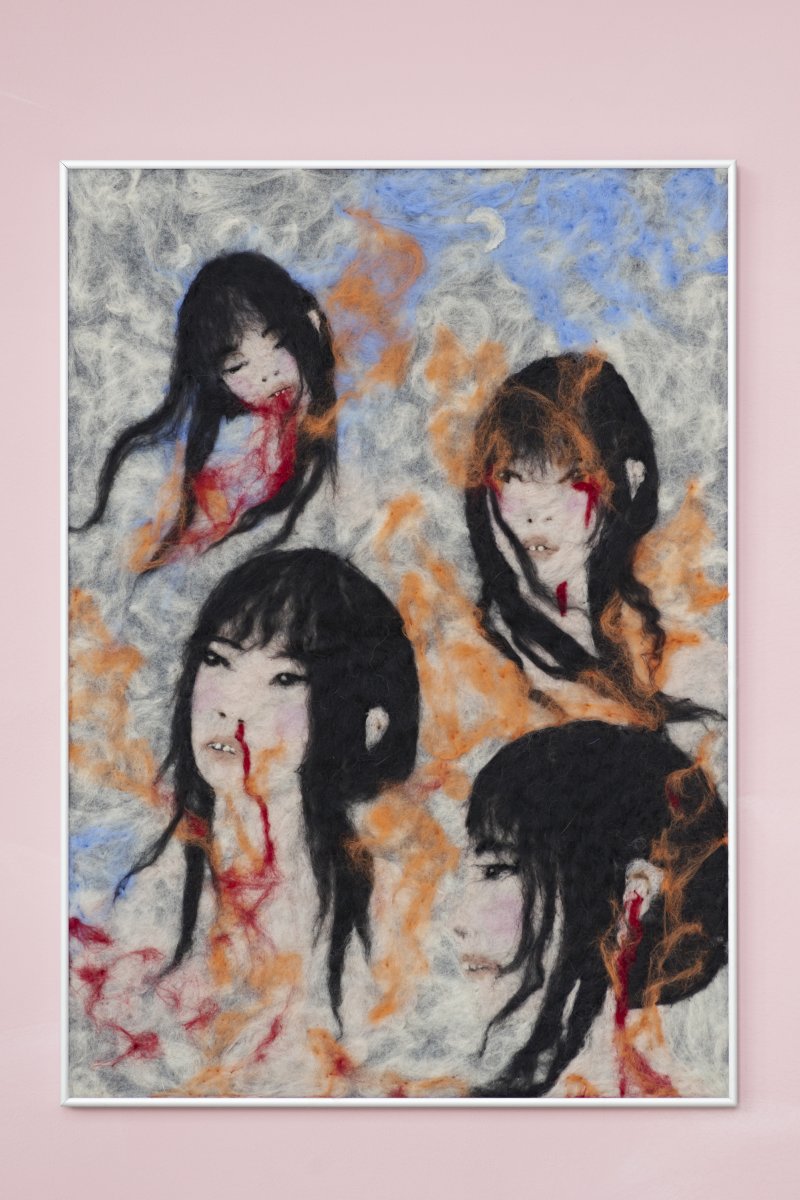
“What flickers red and warm like a flame, yet is not a flame?” — Blood
“What is like ice yet burns, and when it takes you as its slave, makes you a king?” — Turandot
Turandot, who distrusts men due to the violence suffered by her ancestor, constructs a defensive system in the form of riddles. Ultimately, however, she finds within herself the capacity for change and feeling. This story interested me as a narrative not only about anger, but also about its transformation.
The juxtaposition of the two works—the diploma project and the triptych—became a reflection on anger as a response to violence, but also on hope as a possible way out. I wanted to show that strength does not have to be purely destructive—it can lead to breakthrough and healing.
Zuzanna Mrozowska
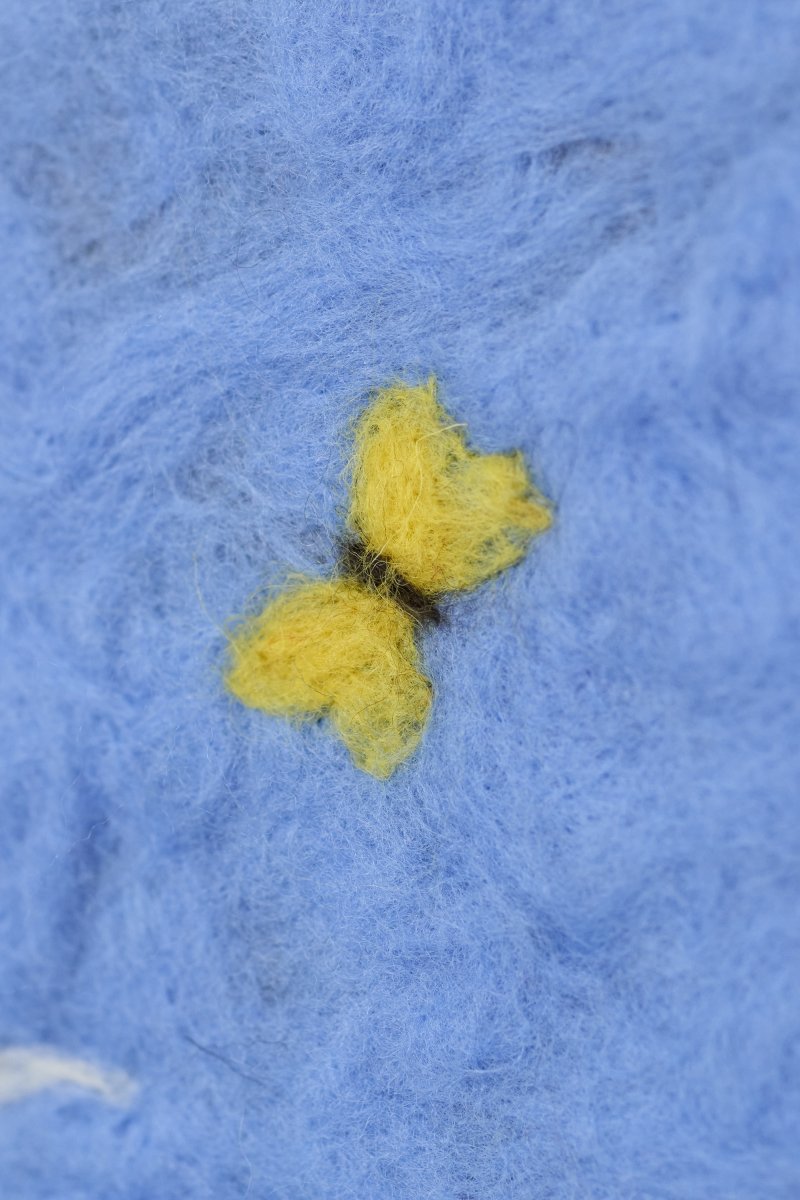
Zuzanna Mrozowska (Mrozia11), born in 2001 in Warsaw, is a visual artist and a student at the Faculty of Media Art at the Academy of Fine Arts in Warsaw. In her practice, she explores the Jungian concept of the “shadow,” symbolic storytelling, and mythorealism. Although her works contain a rich layer of meanings and references, the artist simultaneously strives to preserve a sensual, intuitive mode of reception—in line with the idea of the “erotics of art” articulated by Susan Sontag in her essay Against Interpretation. She is currently focusing on the technique of felting, which she perceives as soft, painterly, and highly malleable, offering broad possibilities for expression and the construction of complex visual forms.







1 / 11


