


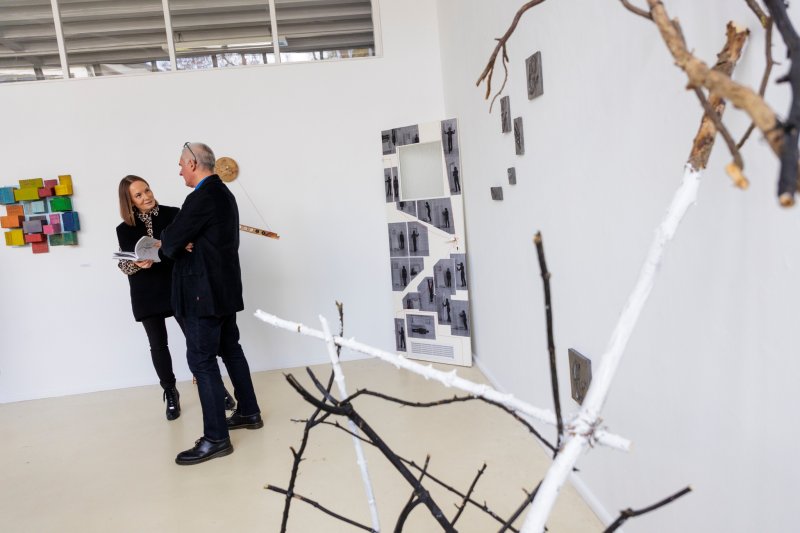
“The Unmarked Map”
The Józef Chełmoński State High School of Fine Arts in Nałęczów
What does a map mean to the students of the Nałęczów art school?
Throughout the project, the students attempted to answer this question they had posed themselves.
The goal of the project was to build an individual, interdisciplinary language of artistic expression and to broaden the scope of creative activity through multi-level activities.
I sketched out a project whose principle and underlying plan is to open young people up to new, extracurricular forms of artistic activity such as installation, performance, happening, and art film, says Łukasz Głowacki, the lead teacher, artist, and performer.
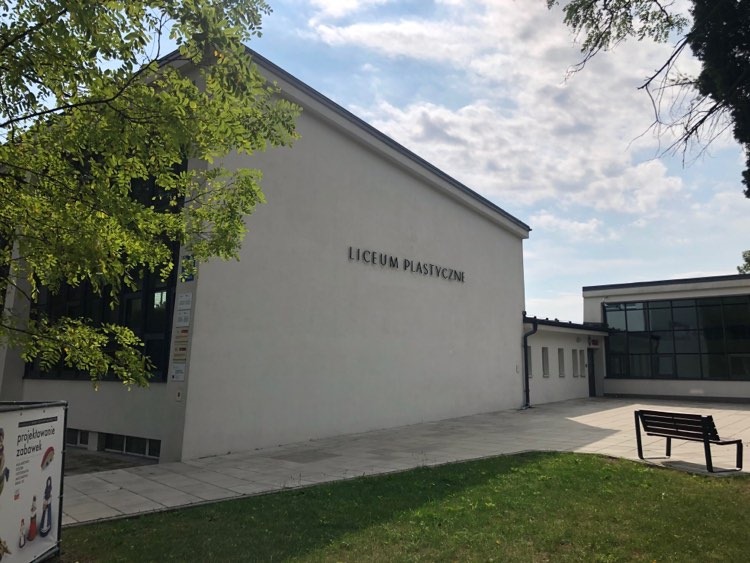
The building of the Nałęczów Art High School
Through a carefully planned series of meetings, a rich curriculum, workshops, lectures, and field trips, instructor Łukasz Głowacki introduces students to the most important concepts in 20th- and 21st-century art history. For the first time on a large scale, students are attempting a multifaceted artistic intervention in their city, creating maps of personal experiences expressed through happenings, installations, photography, painting, and performance.
The planned interdisciplinary projects became more than just traditional media cartography—the activities took place in situ in public spaces and their buildings, squares, nearby forests, the school, or other mysterious locations. The environment of the unmarked map constitutes an unconventional gallery of the city.
Until mid-November 2024, meetings with project participants were held regularly, once a week in the afternoon. These were group sessions divided into the following sections:
THEORY on contemporary art, supported by lectures and presentations of documentation on artistic events and creative approaches.
Topics covered through December 2024:
lecture: “Polish Art of the Second Half of the 20th Century: Selected Examples”
author’s lecture – selected works of contemporary art, explanation of concepts based on documentation: happening, performance, installation, environment
author’s lecture – history of Polish performance art through selected examples of artists: Zbigniew Warpechowski, Jerzy Bereś
lecture – history of Polish performance art through selected examples of artists: Janusz Bałdyga, Akademia Ruchu, Zdzisław Kwiatkowski
lecture – Polish theater through the works of: Tadeusz Kantor, Józef Szajna, Teatr Scena Plastyczny KUL – Leszek Mądzik
THE CREATIVE PROCESS OF “UNMARKED MAPS” – a collective meeting and consultation session for project participants: this involved individual presentations of projects, concepts, and accounts; defining the direction of the exploration; and analyzing the implementation of the participants’ artistic activities. The exploration focused on finding a conceptual form of expression and developing individual and collective descriptions of the participants’ statements, while adapting them to a broadly defined reality.

Fieldwork Documentation

Fieldwork Documentation

Fieldwork Documentation

Fieldwork Documentation
After a few meetings with the project participants, I realized that guiding young people in a way that doesn’t impose a specific topic—limiting my role solely to defining areas of exploration and forms of expression—is quite difficult for some of the participants. Initially, “opening up” to one another was a challenge for the participants, especially when sharing written texts. That is why one of my goals was and remains to build a creative atmosphere of mutual trust and respect. The project phase—that is, the individual search for a topic and area of interest—concluded around November 2024. Since then, I have also been working with each group member on an individual basis, explains Łukasz Głowacki, the lead teacher.
Each participant described their map, their sphere of inspiration and interests.
Topics discussed:
- the symmetry of the human circulatory system in relation to the city’s transportation networks
- mental journeys, delving into areas of individual memory related to family relationships
- the audiosphere - creating a concept for a sound map, listening to selected places and situations, and creating a sound collage
- assigning individual meanings to areas and objects in the immediate surroundings
- exploring the nature of shadows.
The students participated in workshops developing the language of expressive media, such as happenings, performances, installations, and video art.
In December, we held performance workshops and conducted on-camera performances within the school premises. “Actually, I can say that most of the participants have completed their first projects (three projects remain to be completed). I hope to finish the phase of the first performance projects in early January 2025 and move on to the next forms of implementation and individual exploration, says Łukasz Głowacki, the lead instructor.
In addition, the young people also took part in other activities as part of the project:
- volunteer work by project participants in developing and implementing the exhibition program for the “Mała Galeria” at PLSP Nałęczów
- participation in a lecture and a meet-and-greet with artist Natalia Waryszak
- a meet-and-greet and workshops with artist Grzegorz Bożek
- technical assistance with the installation of Kinga Arai’s exhibition, a lecture, and a meet-and-greet with artist Kinga Arai
- representative participation of project members in a meeting - a lecture with art critic and historian Piotr Majewski at the Vistula River Museum in Kazimierz Dolny.
On February 13–14, 2025, a two-day presentation of the project team’s performance documentation took place at the PLSP in Nałęczów.
/

The sequence “Shadow” by Oscar Winek
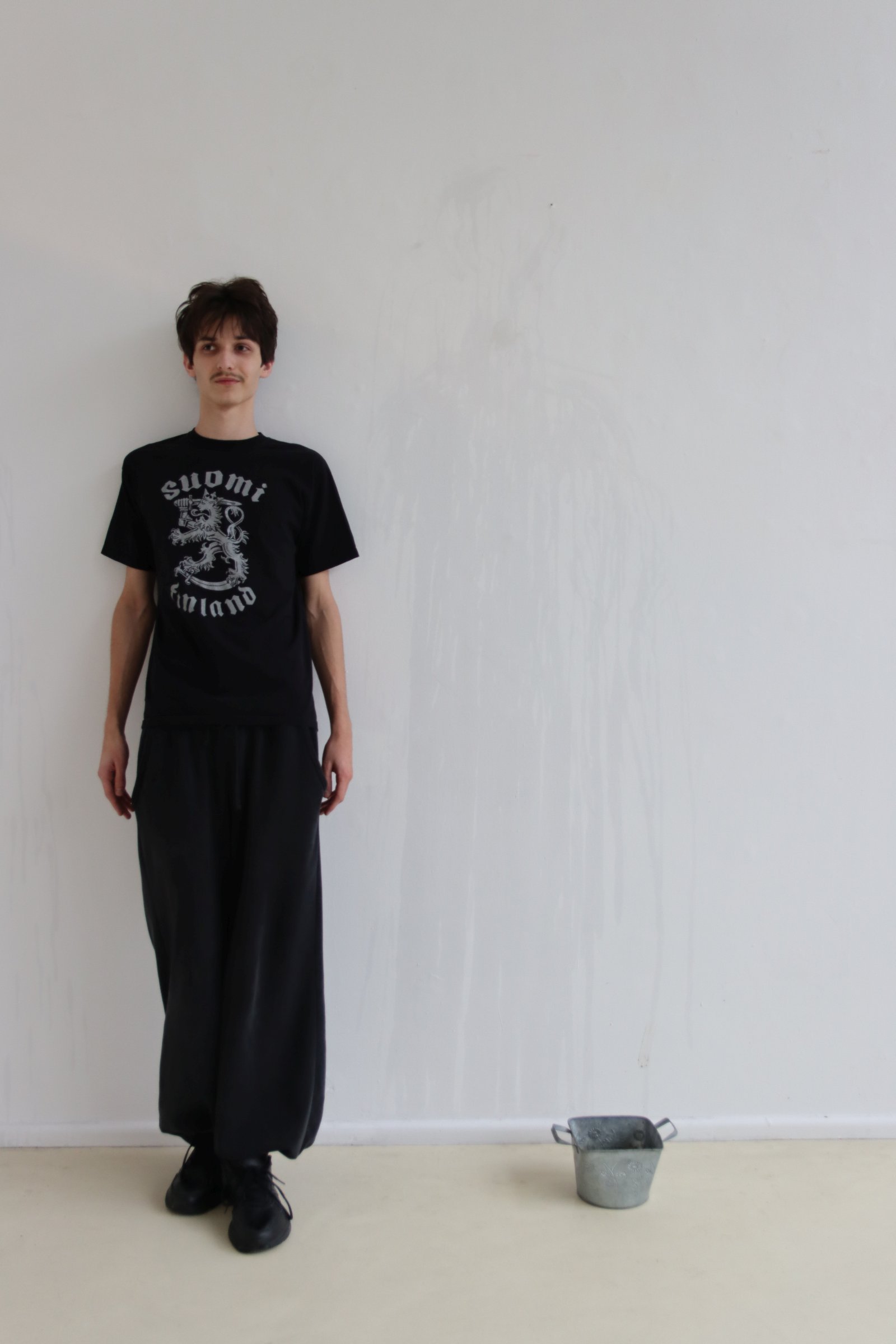
The sequence “Shadow” by Oscar Winek
Oliwia Stelmach’s Map
I began drawing my map eighteen years ago; in childhood, it was obvious. For children, everything is straightforward; only with time do difficult answers to simple questions emerge. We no longer possess the same clarity of thought. I began my search for my true self in the place where I grew up. At first, I would take walks around my grandmother’s house when it was empty; this helped me interpret my feelings artistically through the photographs I took. The feelings I discovered stayed with me, and I learned the art of appreciating the everyday. Observing the ordinary, everyday, and simple tasks performed by my grandmother gave me peace and inspiration to create," documents Oliwia Stelmach.
An old linen blouse
Linen has been used for a long time, so I found myself unconsciously searching for something from the past, that untouched naturalness. I don’t know who this blouse belonged to or its history, but I’m moved by the unknown record of someone’s experiences in these pieces of fabric; to me, it’s simply unique, and I feel it resonates with me. The blouse remained folded and tucked away in the corner of a cabinet drawer. It stayed with me for many years, unnoticed. For me, a map is about setting tight boundaries for myself; the search itself constitutes a place of limitations.

Oliwia Stelmach's Mind Map
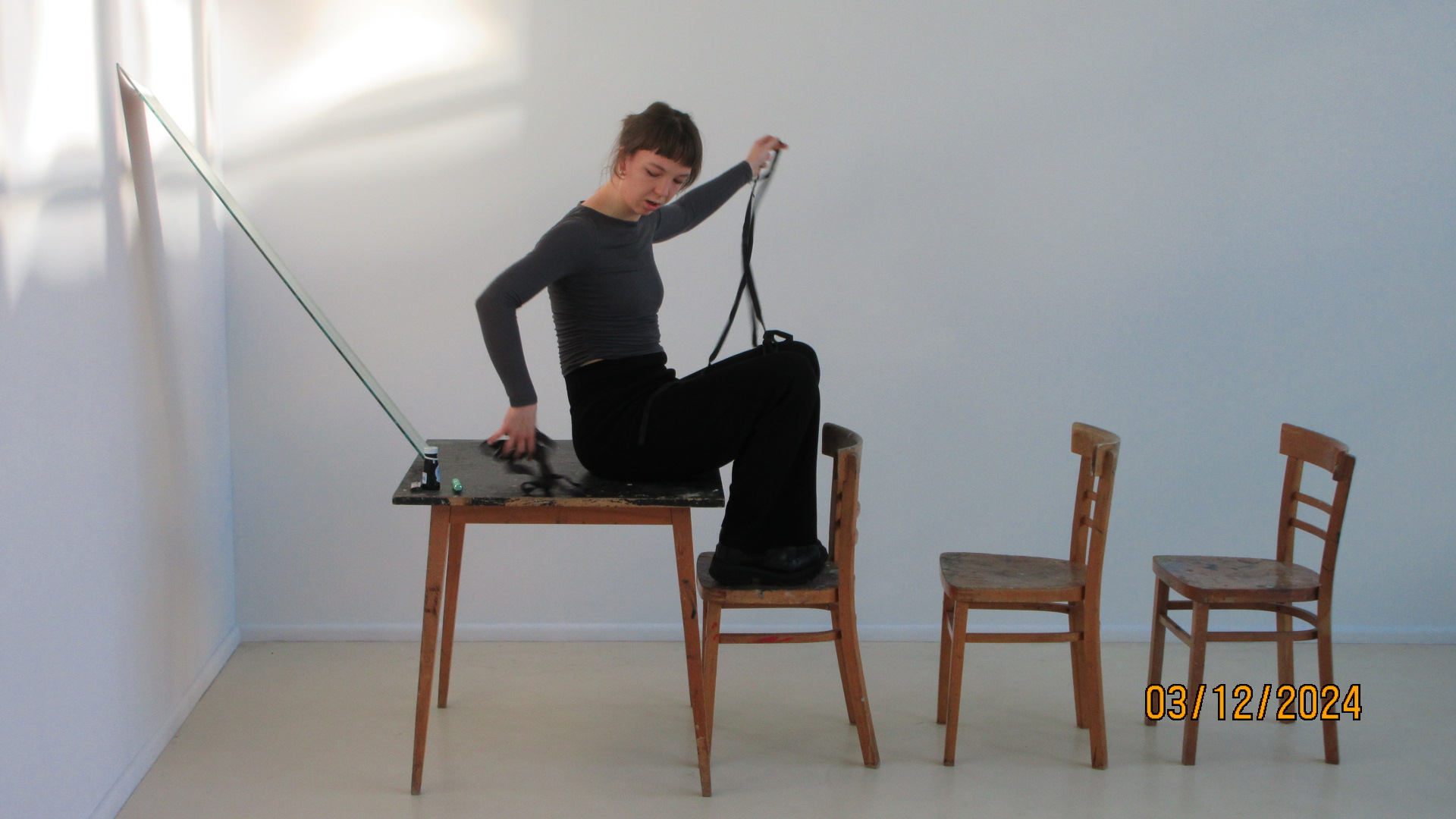
Magdalena Szkutnik’s Performance Sequence
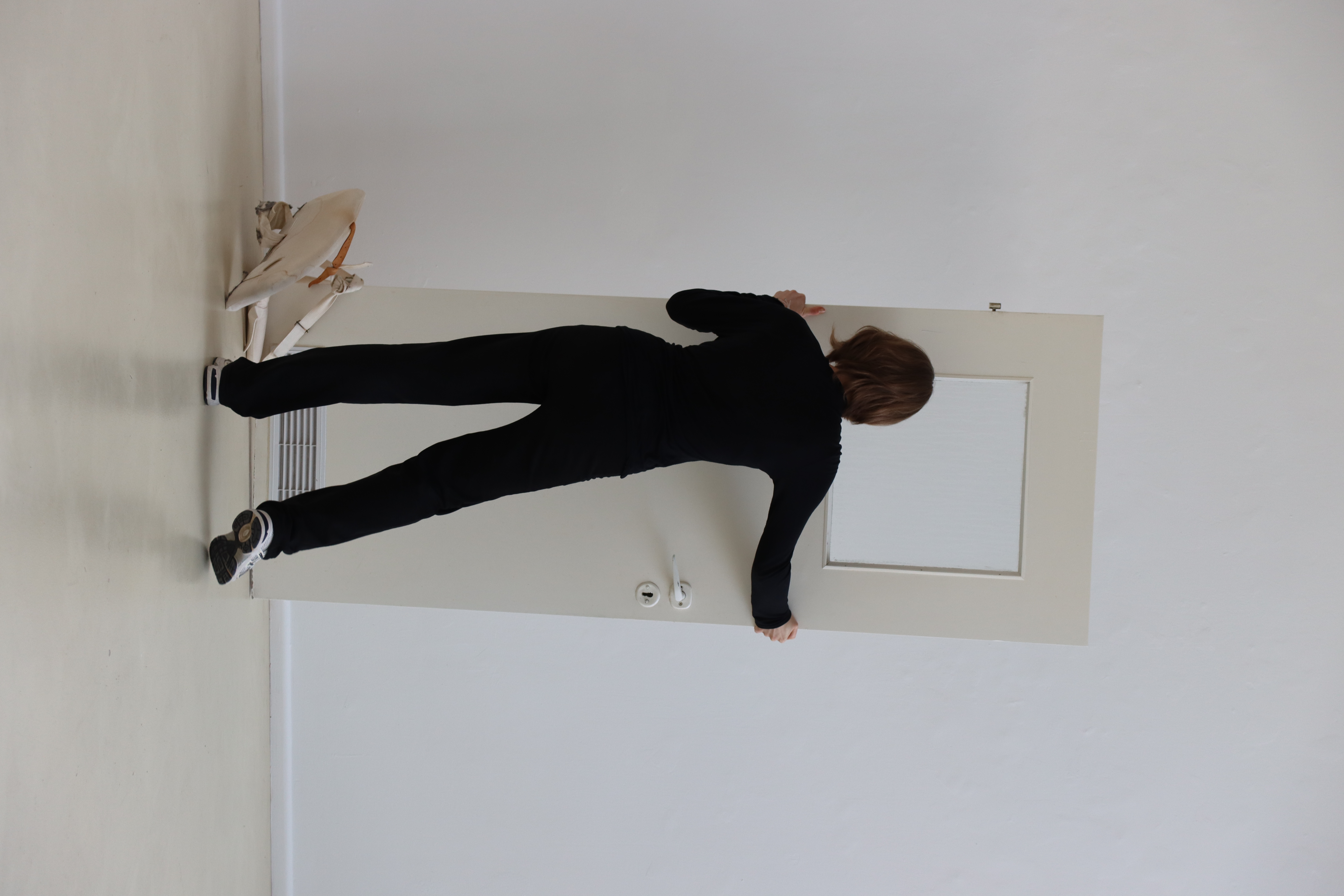
A performative sequence by Anna Klajda
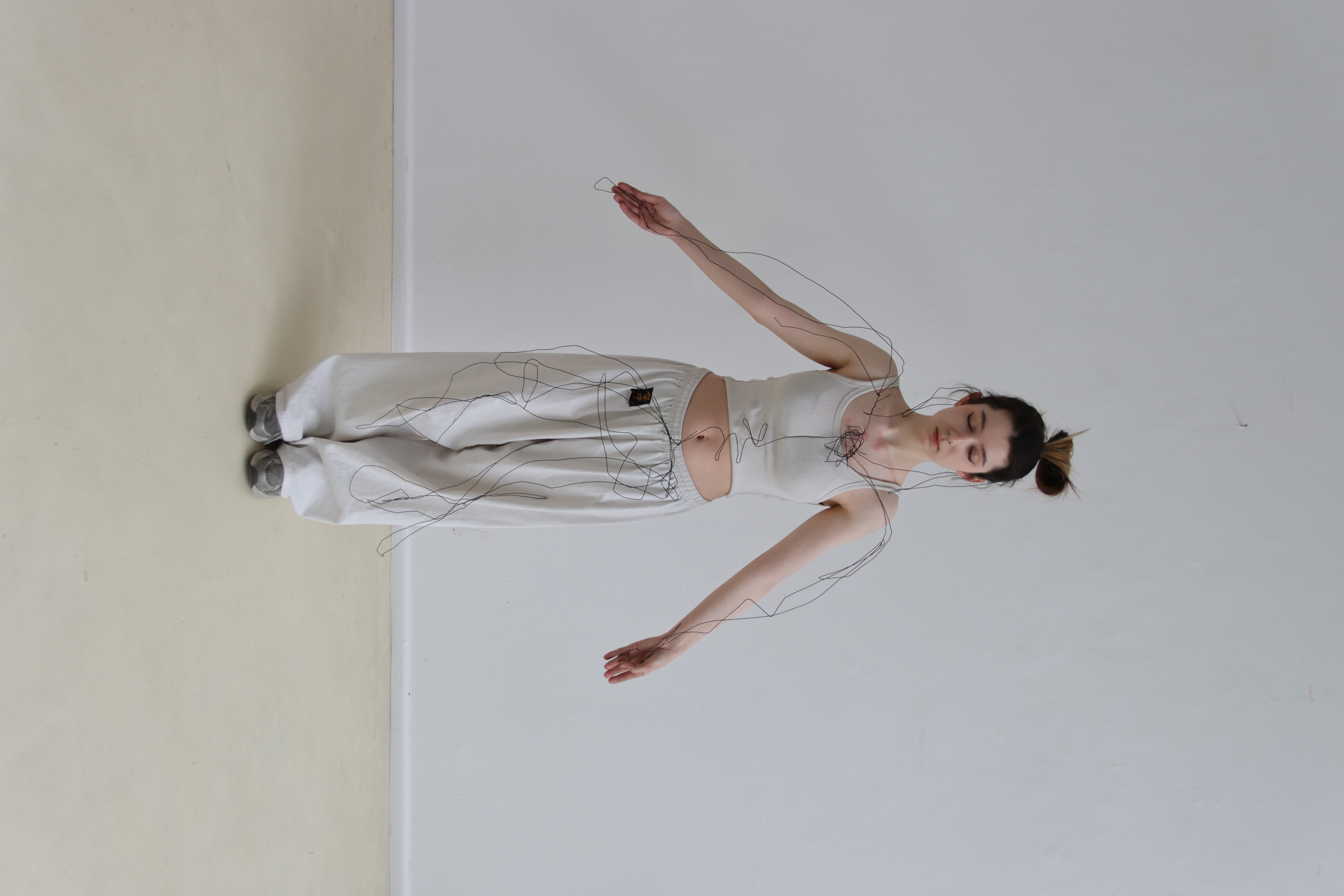
Julia Makuch’s performance piece “Symmetry of Circulatory Systems”
The next phase, which began in February 2025, involved expanding and diversifying the participants’ modes of expression to include, for example, objects, sculptures, sound recordings, installations, and interactive works. These activities continued until the end of May 2025. In June, work began on drafting texts, compiling documentation, and individual work on artifacts and films.
All project participants are equal; no one plays an additional role. The project is carried out by each of them individually. We allow for group and collective presentations; they are each other’s first audience and support one another, says Łukasz Głowacki, describing the nature of the project team.
Project participants: Magdalena Szkutnik, Class IV (by the time of the project finale, already a high school graduate and a first-year student at the Faculty of Painting at the Academy of Fine Arts in Warsaw), Oskar Winek, Class IV, Oliwia Stelmach, Class IV, Julia Makuch, Class IV, Maria Banaszek, Class IV, Agata Gutek, Class IV, Marlena Baca, Class IV, Anna Klajda, Class IV.
The project’s outcomes include: recorded performances by young people, an exhibition of works presented at the “Mała Galeria” at the PLSP in Nałęczów, and the publication *Mapa Nieoznaczona* (Unmarked Map), edited by Łukasz Głowacki, with photographs by Łukasz Głowacki, Anna Klajda, graphic design: Konrad Rządowski, proofreading: Małgorzata Peroń.
Oliwia Stelmach "(O.s)tentacja"
(Os)tentacja is a play on words that incorporates my initials. Tentacja refers to the act of tempting or trying something, as well as proceeding through successive steps, attempts, or experiments. Ostentacja refers to deliberate, exaggerated behavior intended to impress others.
/Oliwia Stelmach/
Anna Klajda, “The Door”
In my view, doors are the beginning and the end. They define and separate our space - the place we leave and the place we return to. We even feel safer where this kind of separation exists. Each of us needs our own space, which can only be created by our movement. They are a passage, a demarcation between the interior and the exterior, which I understand in both a literal and an emotional sense.
/Anna Klajda/
Magdalena Szkutnik, “The Senses”
Being yourself in a world
full of masks and expectations
isn’t always easy.
/Magdalena Szkutnik/
Agata Gutek, “A Personal Topography of Lostness”
What is a map, if not an attempt to tame chaos?
What am I - in the face of
a map that shows
neither beginning nor end?
/Agata Gutek/
Oscar Winek, “The Form of Light, the Form of Shadow”
Tension
It seems like nothing - just a few sticks,
but something is happening between them
something is holding on
Not because it HAS TO
but simply because it hasn’t let go YET
A wire isn’t a structure,
it’s a decision
a temporary one
it holds, but not forever
/Oscar Winek/
Julia Makuch, “The Beginning of Circulation”
The starting point for the project was the need to bring together two worlds:
biology and art.
/Julia Makuch/
Marlena Baca, “Stability”
After all, art is not just the result, but above all a process. Every step, no matter how small, leads to the discovery of something new - about the world, about objects, about oneself.
/Marlena Baca/
Maria Banaszek, “Synchronization”
(...) a series of guided meditations with my eyes closed. I sat in various places - in the park, by the water, at a construction site, among people, and alone. I covered my eyes so that I could experience the space solely through sound.
/Maria Banaszek/
So we return to the question: what is a map?
A map is a kind of universe, but its interpretation - understood as a shared framework - remains both individual and collective, says Łukasz Głowacki, the lead instructor.
On October 30, 2025, amidst the golden autumn of Nałęczów, our Foundation participated in the project’s finale at the Mała Gallery at the Józef Chełmoński State High School of Fine Arts in Nałęczów.

Students: Oliwia Stelmach, Anna Klajda, Magdalena Szkutnik, a graduate of the PLSP in Nałęczów and a first-year student at the Faculty of Painting at the Academy of Fine Arts in Warsaw, Agata Gutek, Oscar Winek, Julia Makuch, Marlena Baca, Maria Banaszek - each focusing individually on a different theme and area of interest - experienced the reality surrounding them, transforming it into an individual, subjective map whose open form invites further discoveries and creations.

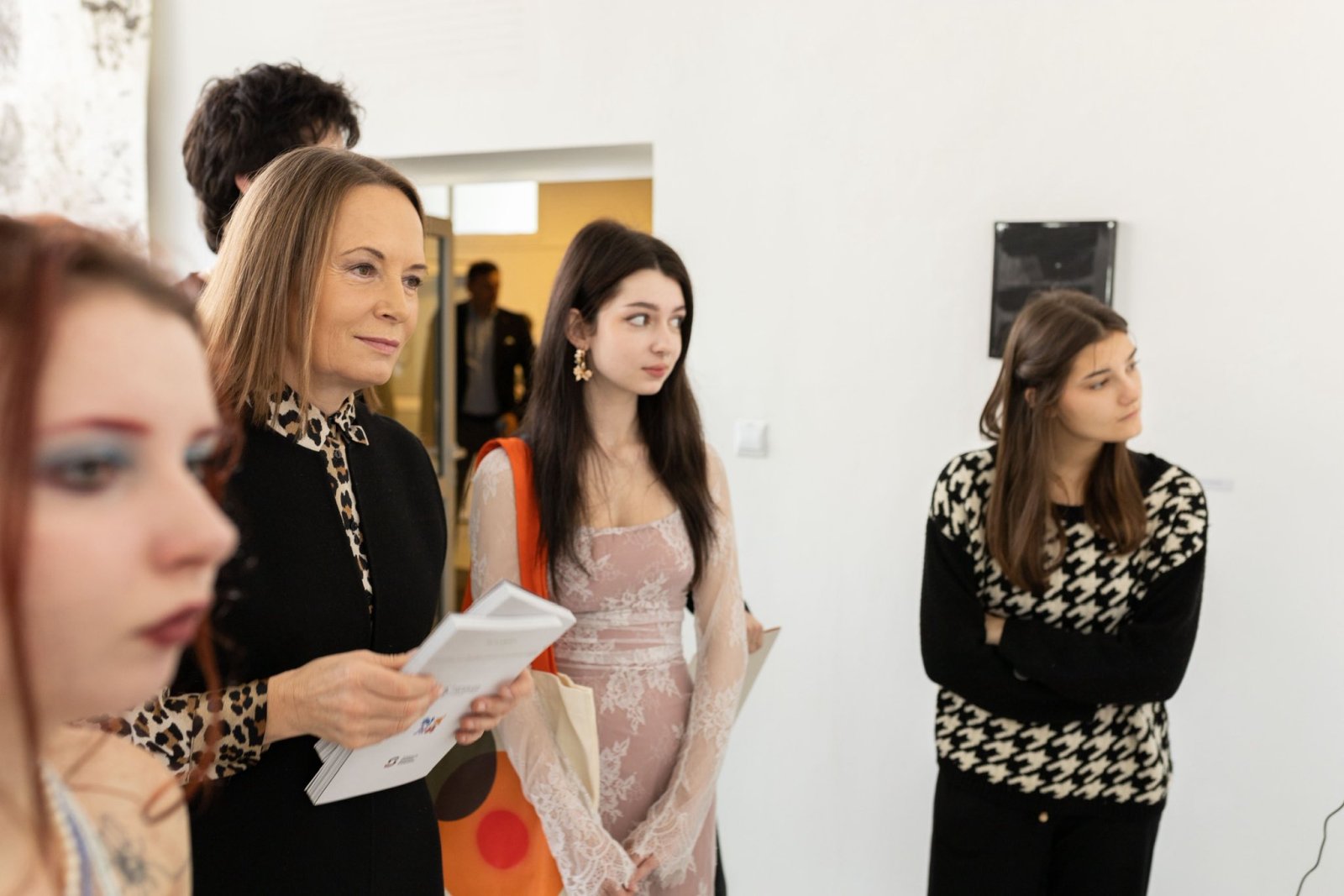
We congratulate the participants and the supervising teacher on the completion of this ambitious, multifaceted project, which places the students’ overall achievements on an academic level!
INSTRUCTOR
Łukasz Głowacki, a certified teacher of drawing and painting, has been the curator of the Mała Galeria PLSP Nałęczów since 2020. He studied at the Faculty of Painting and Graphic Arts at the State Higher School of Fine Arts in Gdańsk, earning his degree in painting in 1990. He works in performance art, painting, and set design. He creates objects, installations, and video art. He has participated in dozens of solo and group exhibitions. In 2020, he was a co-curator of the 22nd International Art Festival “INTERAKCJE” in Piotrków Trybunalski. In 2022, he received an honorable mention at the Wrocław Drawing Triennial Competition “Don’t Look Back” for the film “Form of Imbalance” - First Prize at the 5th Piotrków Art Biennale in Piotrków Trybunalski for the series of works “Form of Fall” and “Phrygian Cap” (2019) - Joint Grand Prize of the Marshal of the Lublin Province for the painting “Tablica” (2008) - Award of the Governor of Gdańsk for the most outstanding debut in 1991. The artist’s works are included in the collection of the Lublin Society for the Encouragement of Fine Arts and the “Labirynt” Gallery in Lublin.
https://www.facebook.com/plspnaleczow
https://www.instagram.com/plspnaleczow/
https://www.instagram.com/mala_galeria_plsp/


