


"Define the boundary of the dream – create a 1:1 map leading from the idea to the materialized object – your own vessel"
Jan Matejko State High School of Fine Arts in Nowy Wiśnicz
The goal of implementing the concept is to deepen the experience of carrying out an original project from the idea to the industrial object. Improving skills and building a sense of agency in the student.
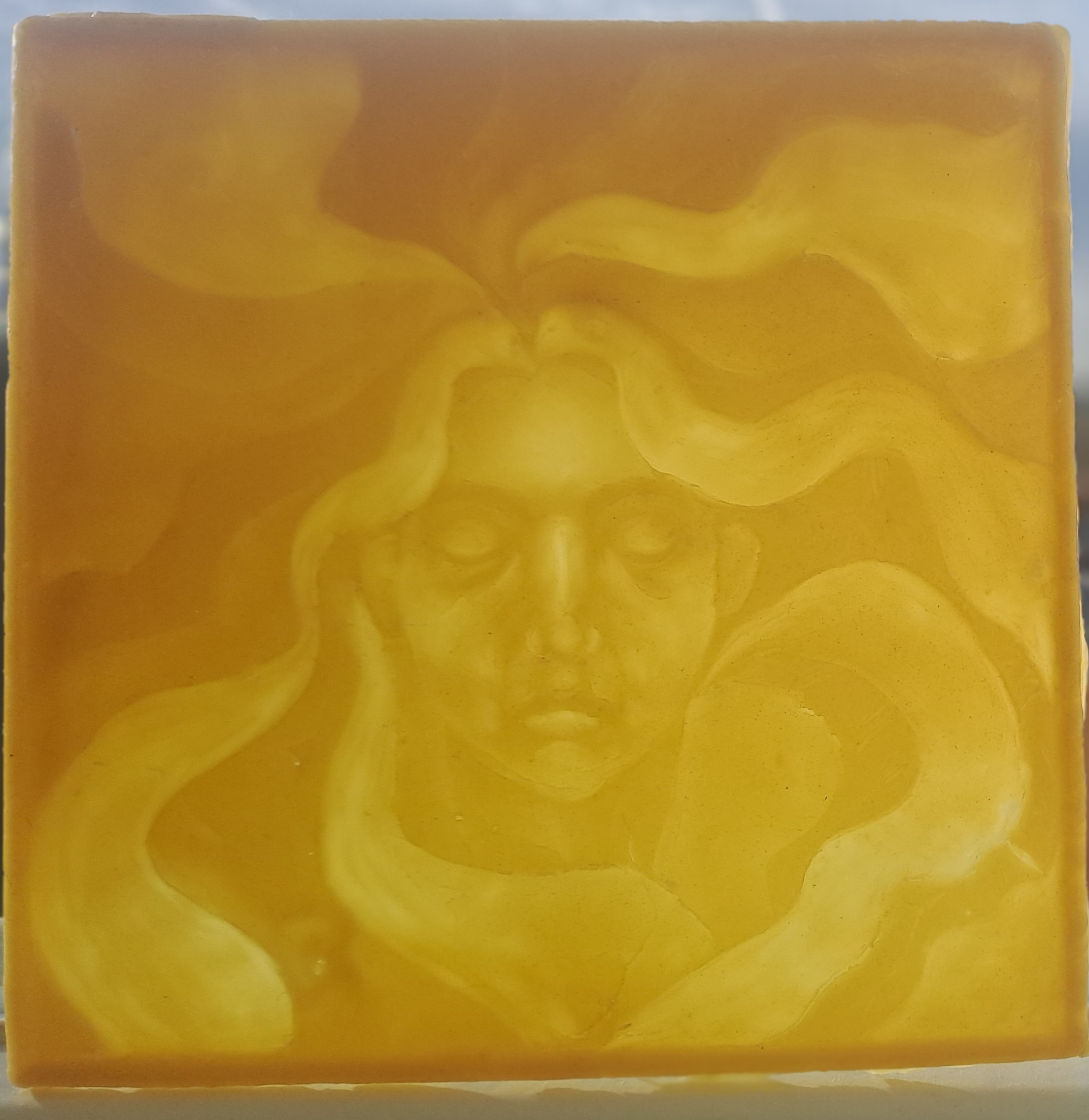
The project team, emboldened by the implementation of the project entitled "Lithophane - what hides in the soul. Mindfulness in the relationship with oneself. Creating images using a unique porcelain decorating technique," which was awarded in the 5th edition of the Grant Program Competition "Inspiration," wanting to develop towards improving this technique, proposed the implementation of another project.
Students openly express their desire to create their own porcelain objects! In the project, students will create individual designs of three-dimensional porcelain forms and will make a collective installation using the technique of lithophane - says Aleksandra Biedka, the teacher leading the project.
From October to December 2024, the project team participated in workshops at the PLSP in Nowy Wiśnicz for 2 hours once a week, focusing on the design of models and graphic signs, starting from drawing sketches, through modeling in Blender 3D, to making turned clay models. This module was supervised by Magdalena Potaczek-Szwed, co-author of the project and teacher of basic design: composition and multimedia design.
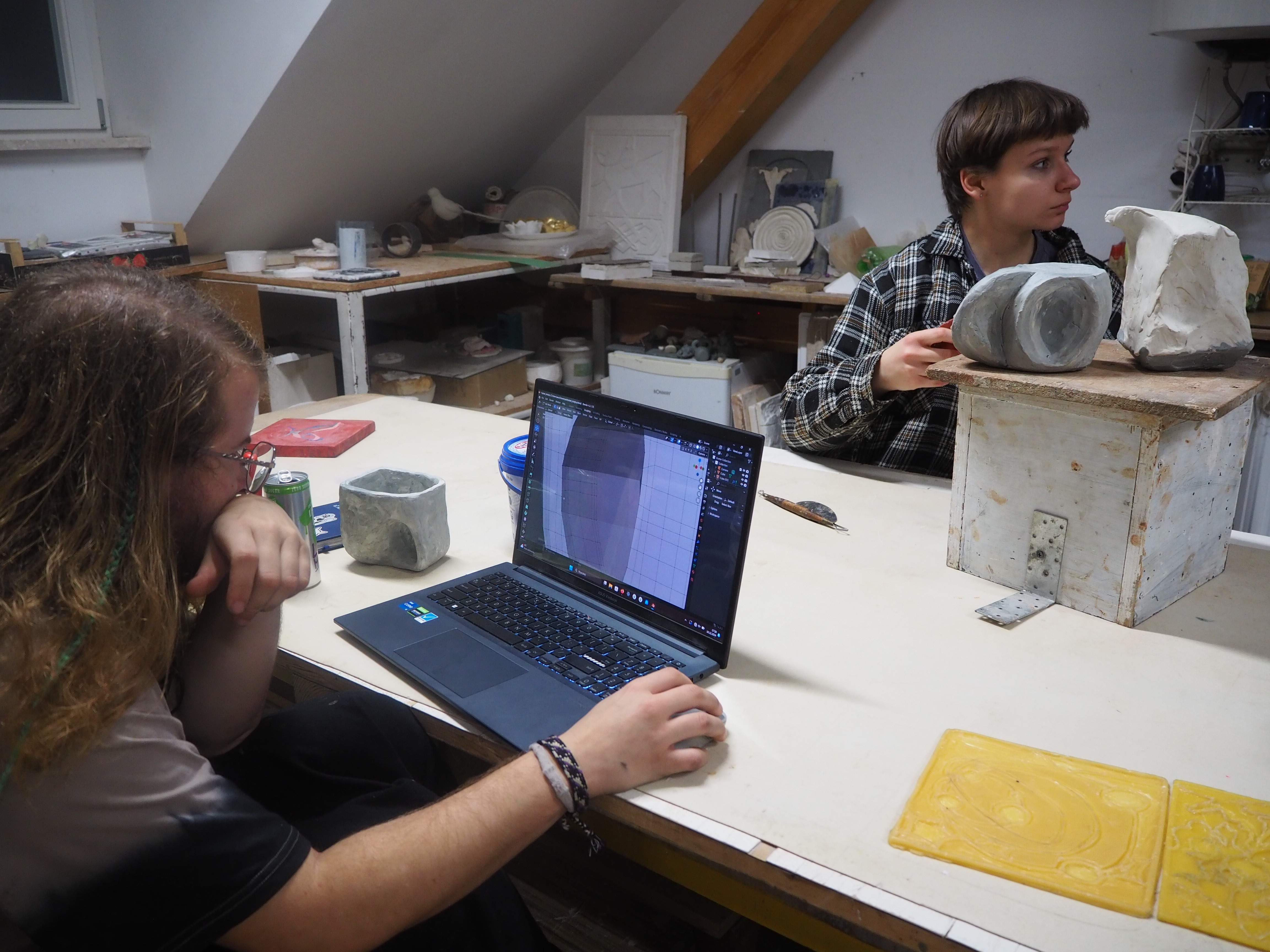
In the second module, students participated in classes on designing and making models in clay, plasticine, and plaster, casting lost molds, and making wedge-shaped plaster molds. The classes were conducted by the lead teacher Aleksandra Biedka, a teacher of architectural element restoration, who also explores the lithophany technique.
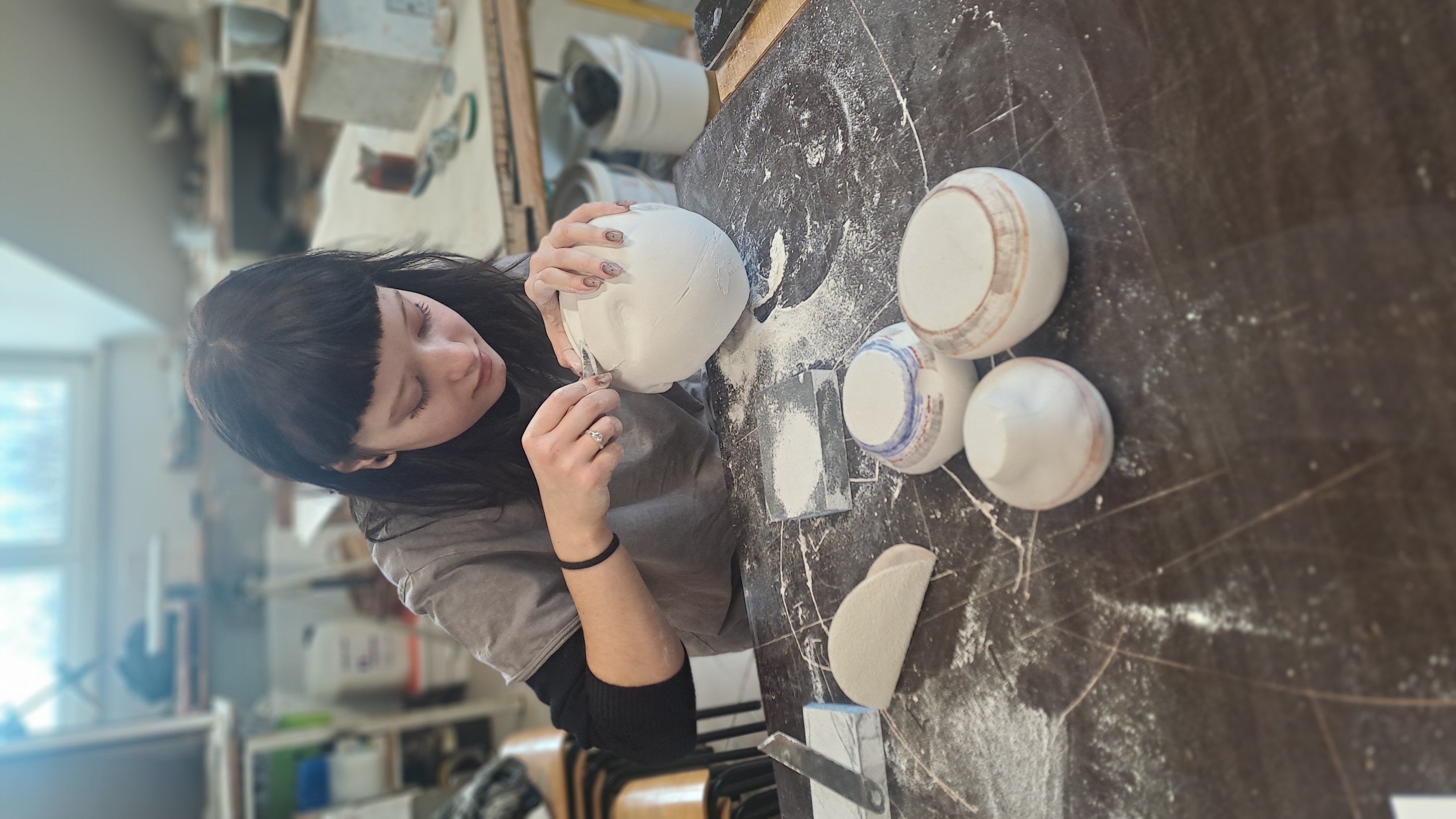
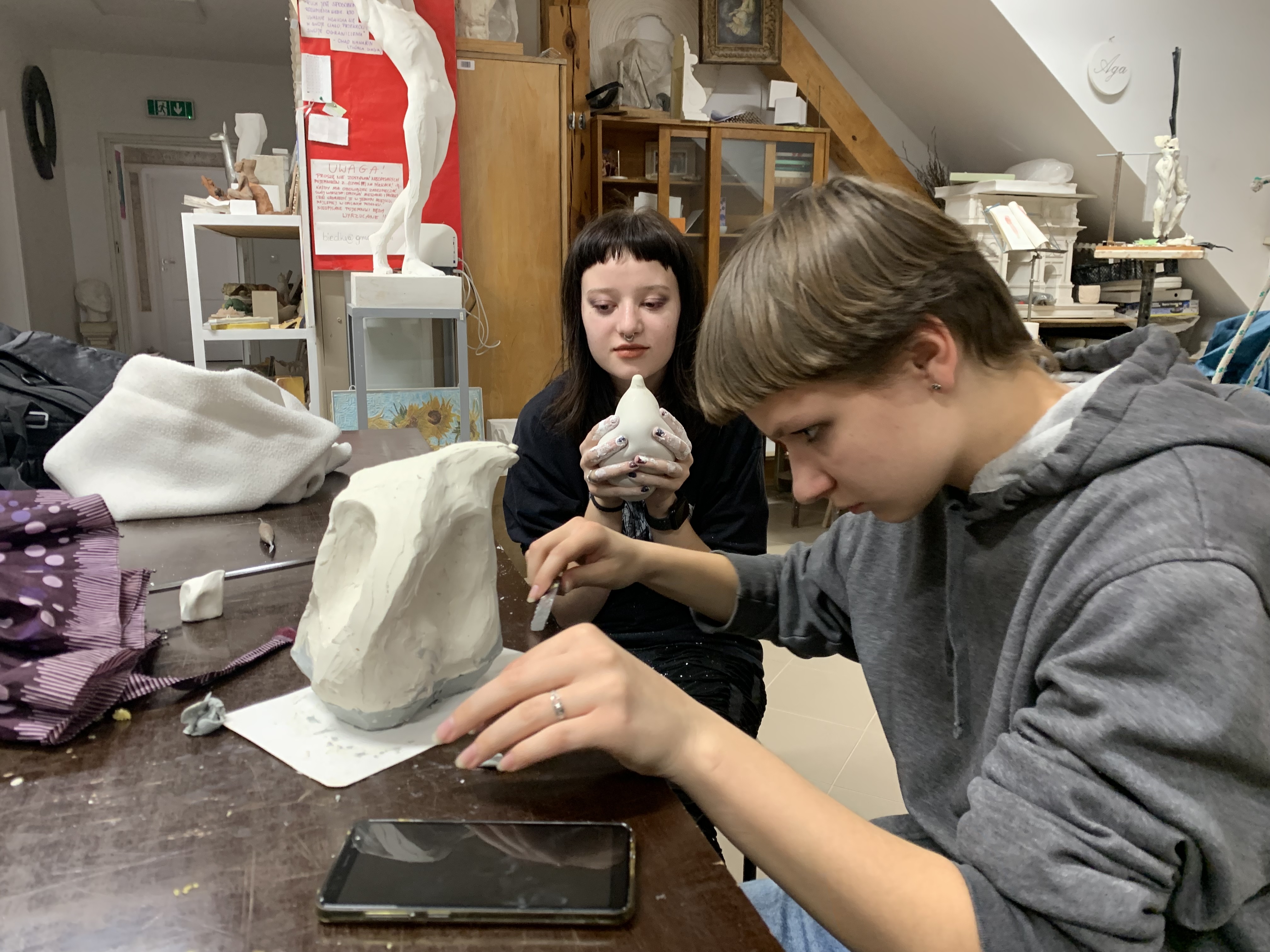
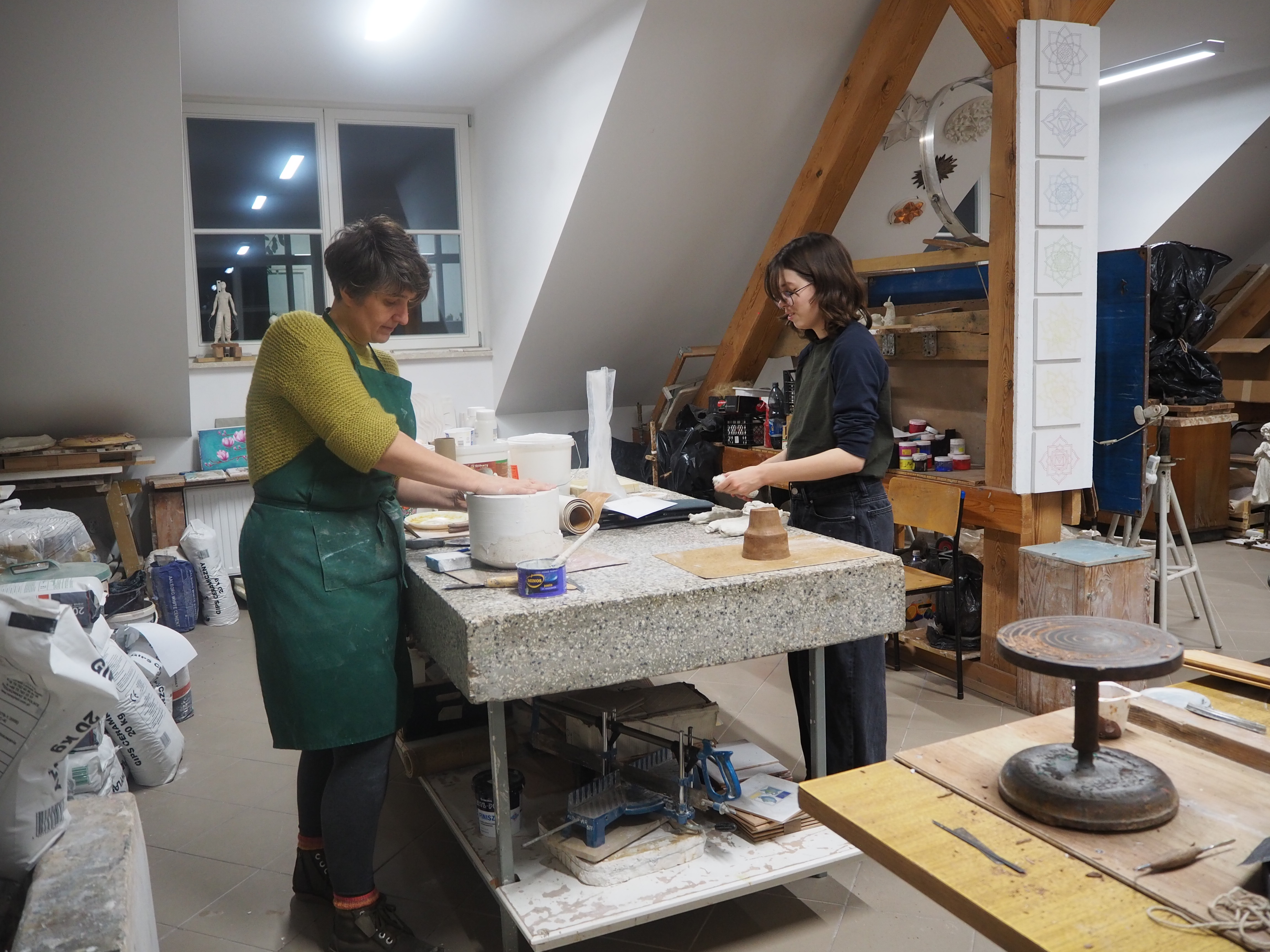
On January 8, 2025, workshops on pouring plaster molds with slip and the first firing in the school kiln in Nowy Wiśnicz began.
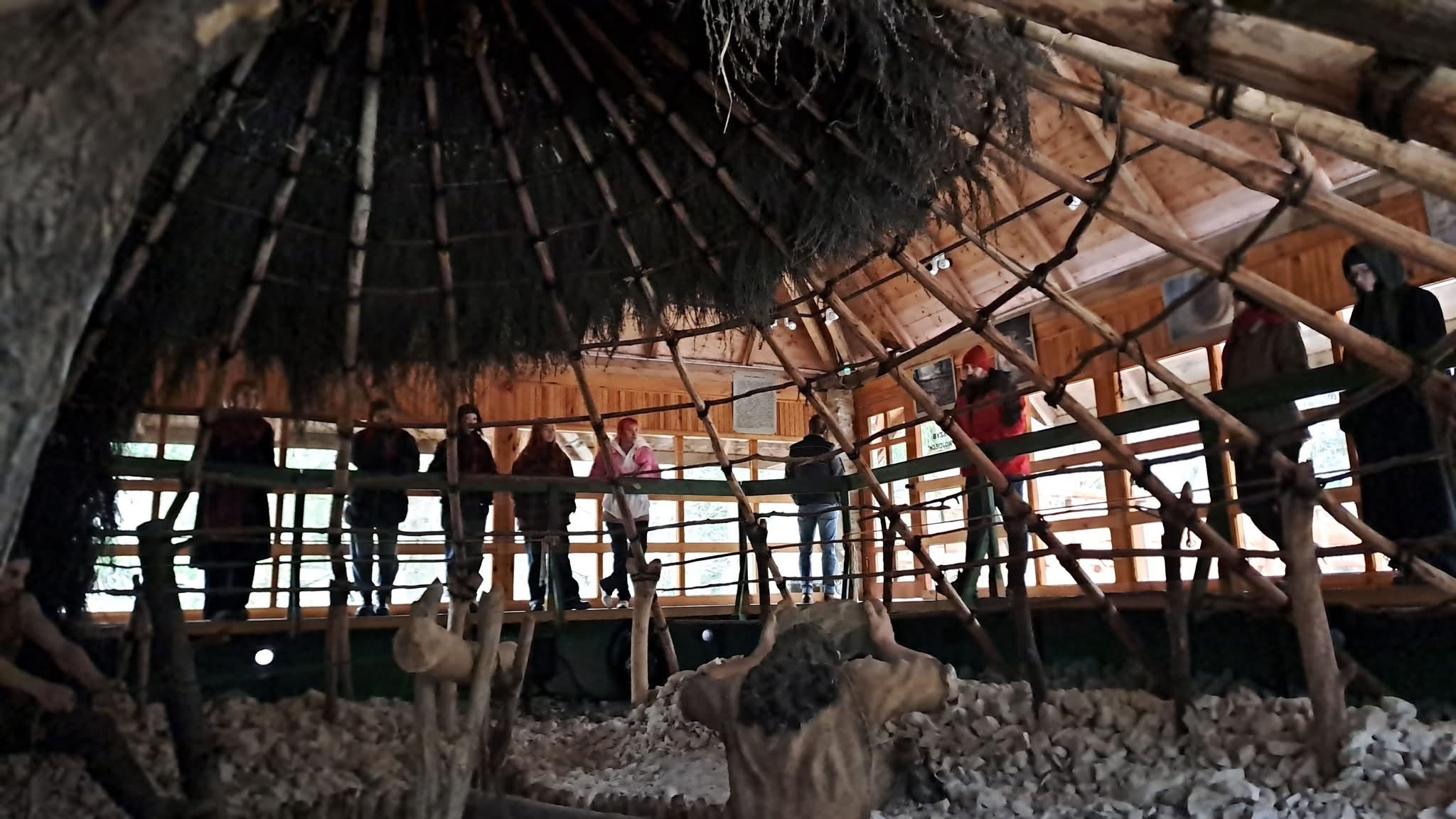
From January 20 to 24, 2025, students worked at the Polish Porcelain Factories Ćmielów and Chodzież in Ćmielów. During the field session, students experienced all stages of porcelain production, including its decoration. They also made lithophane casts. They toured historic sites closely related to the project and serving as a source of inspiration and historical knowledge, such as: Krzyżtopór Castle in Ujazd, the Historical and Archaeological Museum in Ostrowiec Świętokrzyski – the Ćmielów porcelain exhibition, the Neolithic Striped Flint Mine, and the Romanesque Collegiate Church in Opatów.
This is how he describes the visit of the youth to the Historical and Archaeological Museum in Ostrowiec Świętokrzyski on his social media: We hosted students from the Jan Matejko State High School of Fine Arts in our museum. But our guests also visited the Polish Porcelain Factories "Ćmielów" and "Chodzież" S.A. in Ćmielów every day. All of this is because the youth – under the watchful eye of Aleksandra Biedka and Magdalena Potaczek-Szwed – are currently carrying out an educational-artistic project entitled "Define the boundary of a dream. Create a 1:1 scale map leading from the idea to the materialized object – your own vessel" as part of the sixth edition of the Nationwide Competition of the "Wena" Grant Program of the Starak Family Foundation entitled "Map in one-to-one scale."
The project authors admit that Ćmielów has become a very important point on the map for them in carrying out the task. The stay at the factory resulted in ideas for further activities with students, and the participants themselves developed a desire to create their own porcelain objects.
We are very pleased that at the Wielopolski Palace in Częstocice, the youth could admire a collection of antique porcelain vessels, the vast majority of which were produced in the Ćmielów factory. Meanwhile, at the Archaeological Museum and the Krzemionki Reserve—besides the prehistoric striped flint mines—students could learn about the ceramics of cultures whose representatives exploited the Krzemionki mines: funnel beakers, the Globular Amphora culture, and the Mierzanowice culture.

The project team, except for two new members, is composed of students from grades 3 to 5, who worked on the previous competition lithophane project.
Creating models according to their own designs, participation in the trip to the Porcelain Factory:
Grade 4 students : Grade 5 students:
Lilianna Maślaniec Anastazja Gierlak
Matylda Krzywda Katarzyna Zabłocka
Hanna Kopczyk Natalia Wrona
June Midura Zuzanna Basista
Julia Sarad
Aleksandra Małyszek
Kinga Wawrzeń grade 4 and Zofia Malec grade 3 - creating lithophane models.
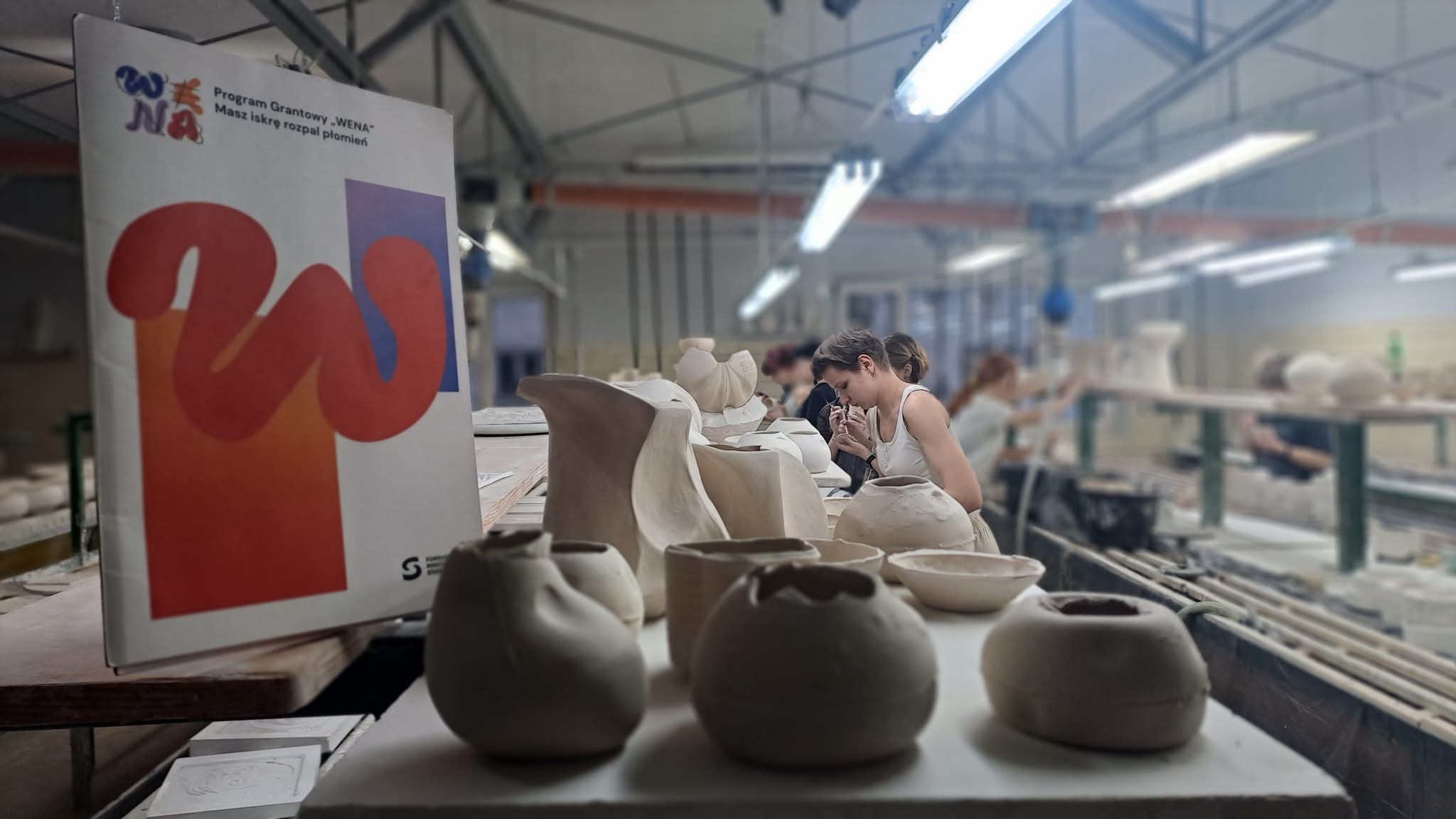
In this case, the map is the path taken by the students to materialize the dream of finding their own original form, expressed in porcelain. This path began with the project 'Lithophany - what hides in the soul. Mindfulness in relation to oneself. Creating images using a unique porcelain decorating technique,' awarded in the 5th edition of the 'Inspiration' Grant Program Competition titled 'What's going on in art?'
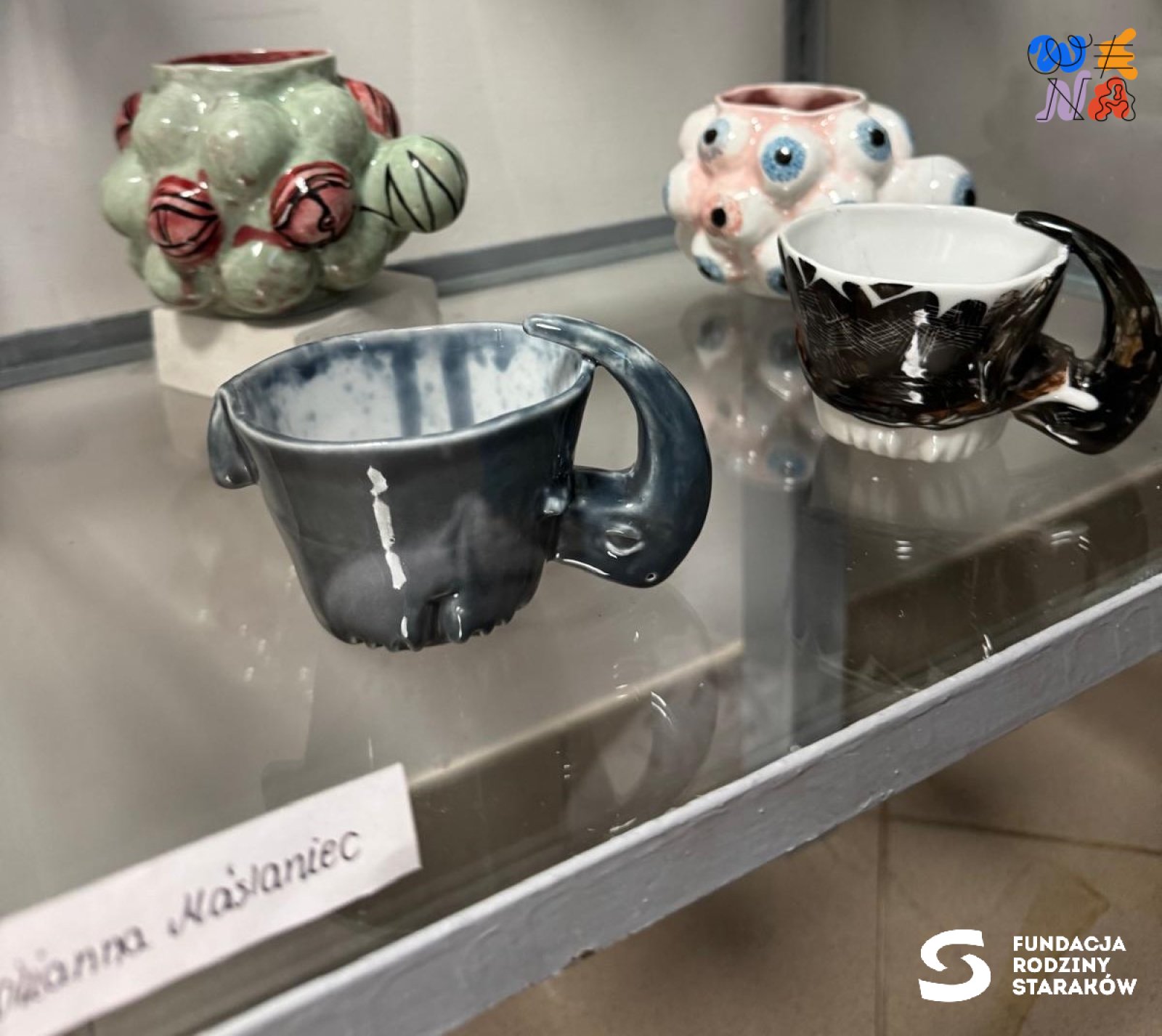
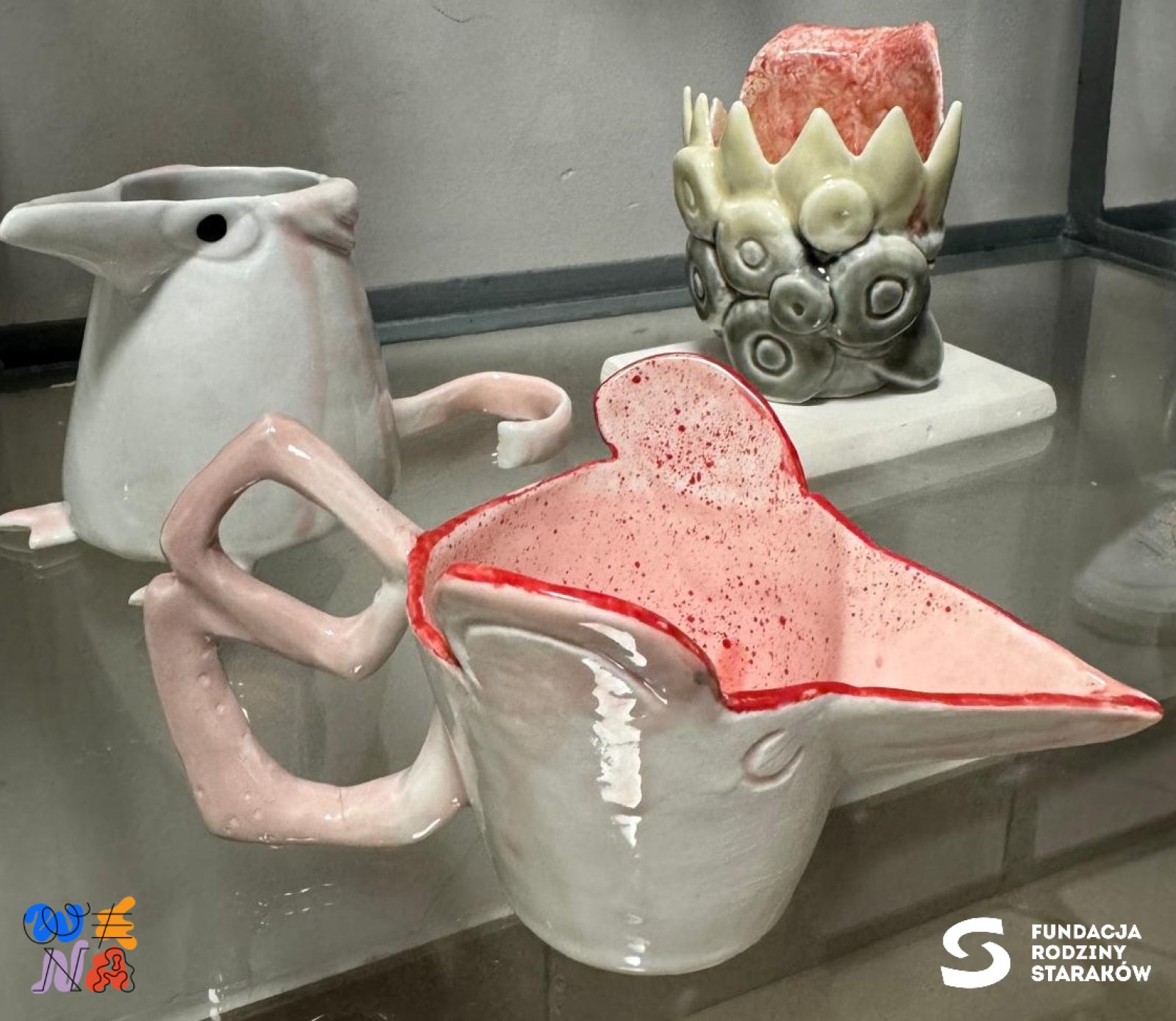
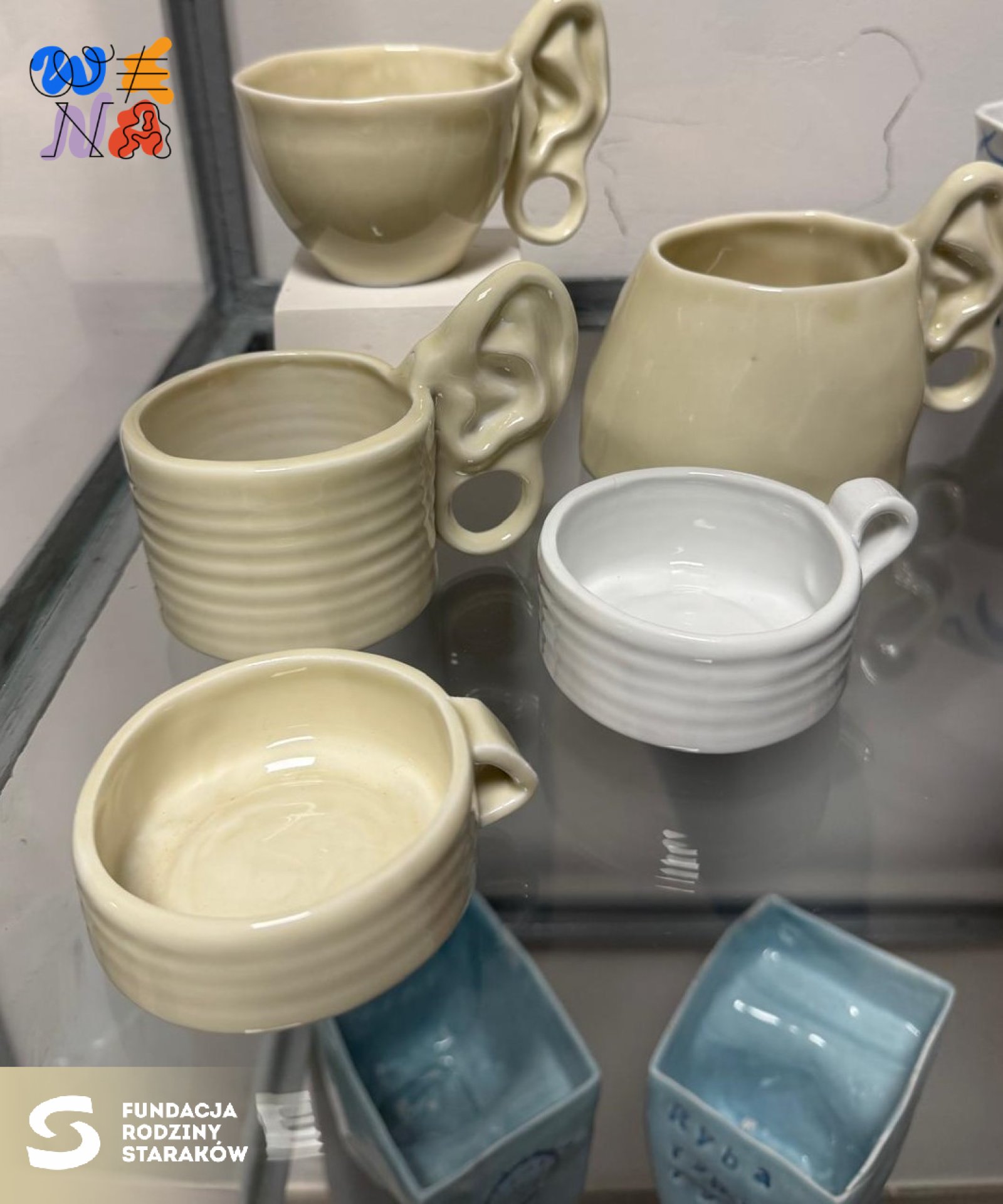
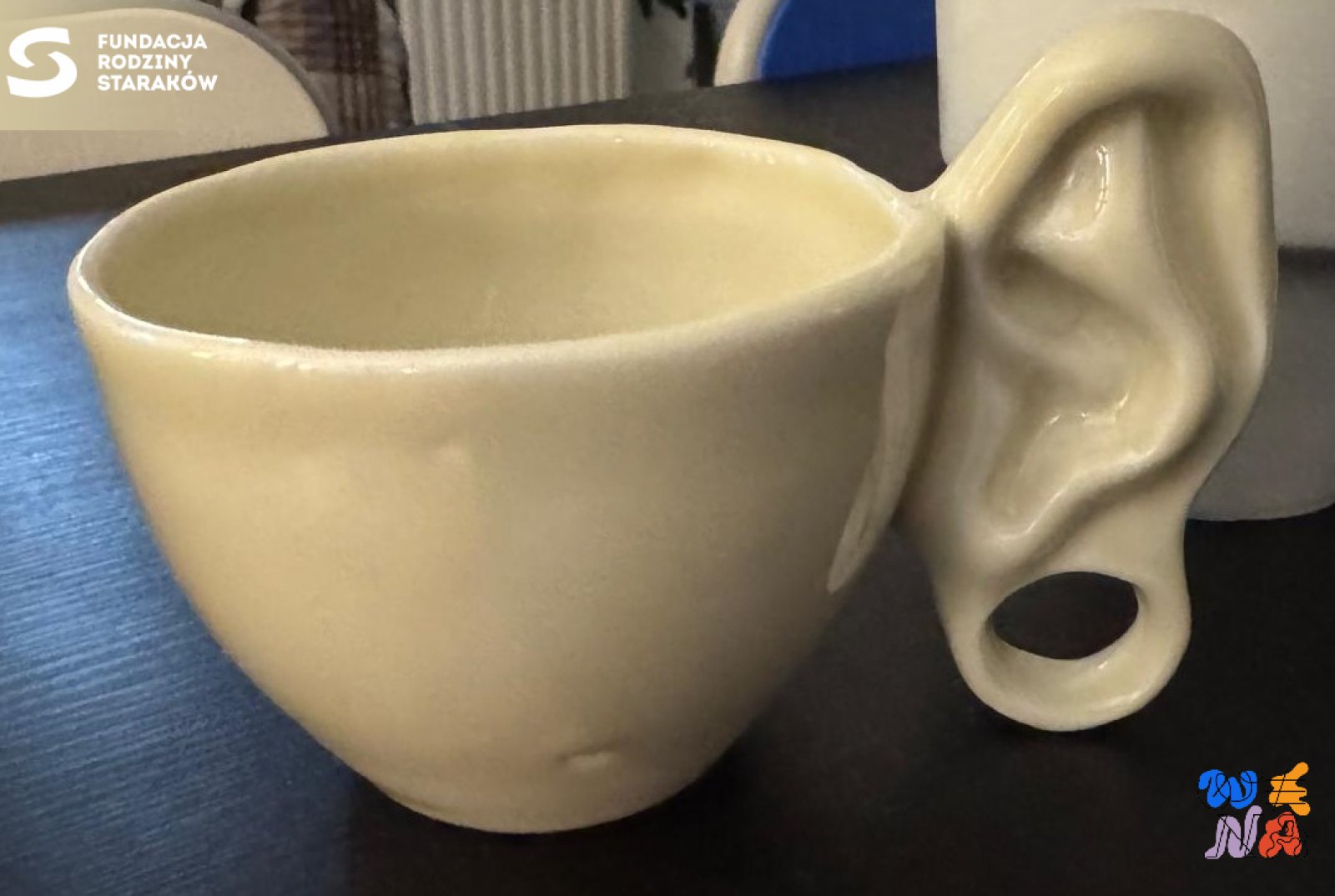
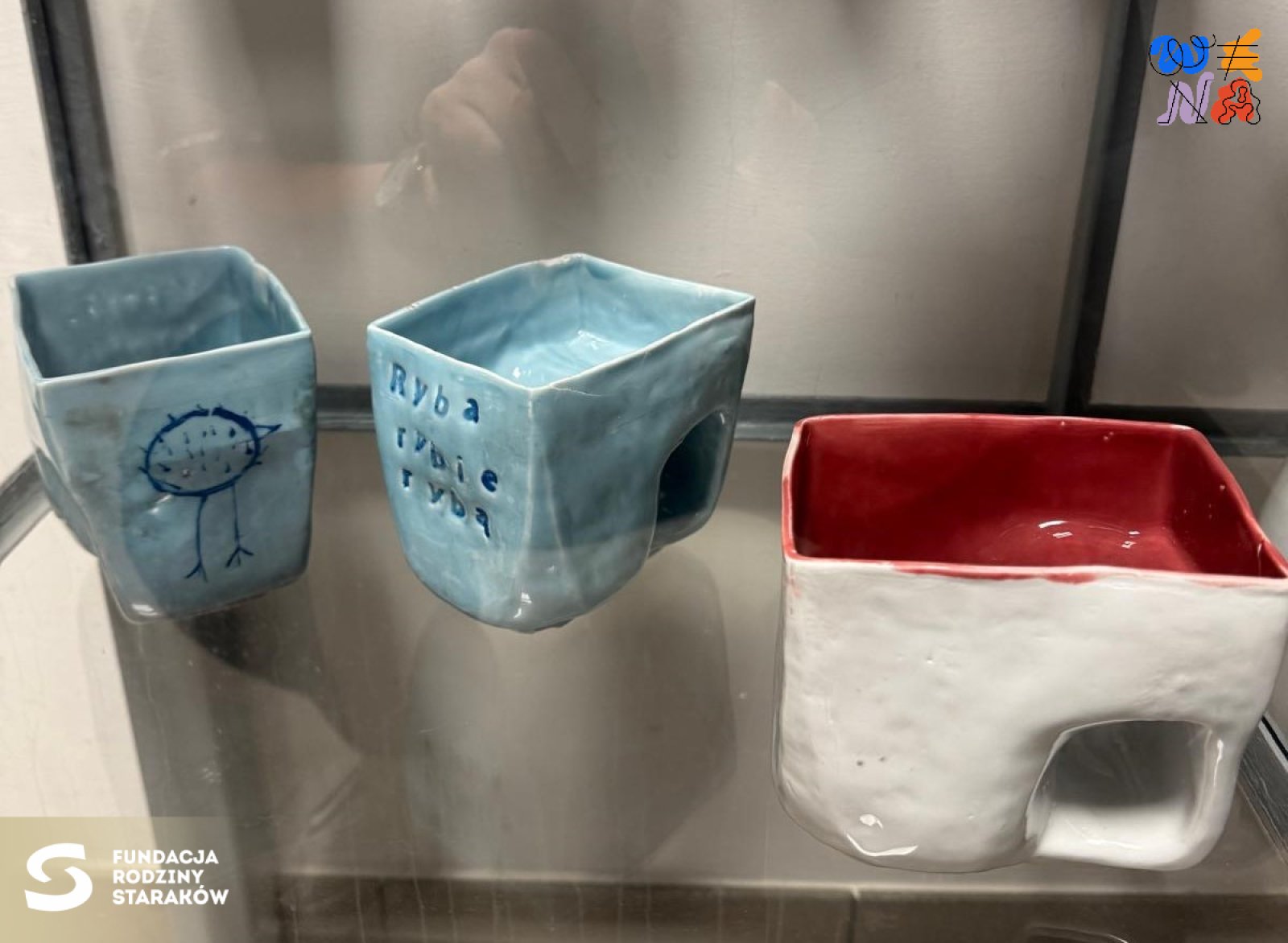
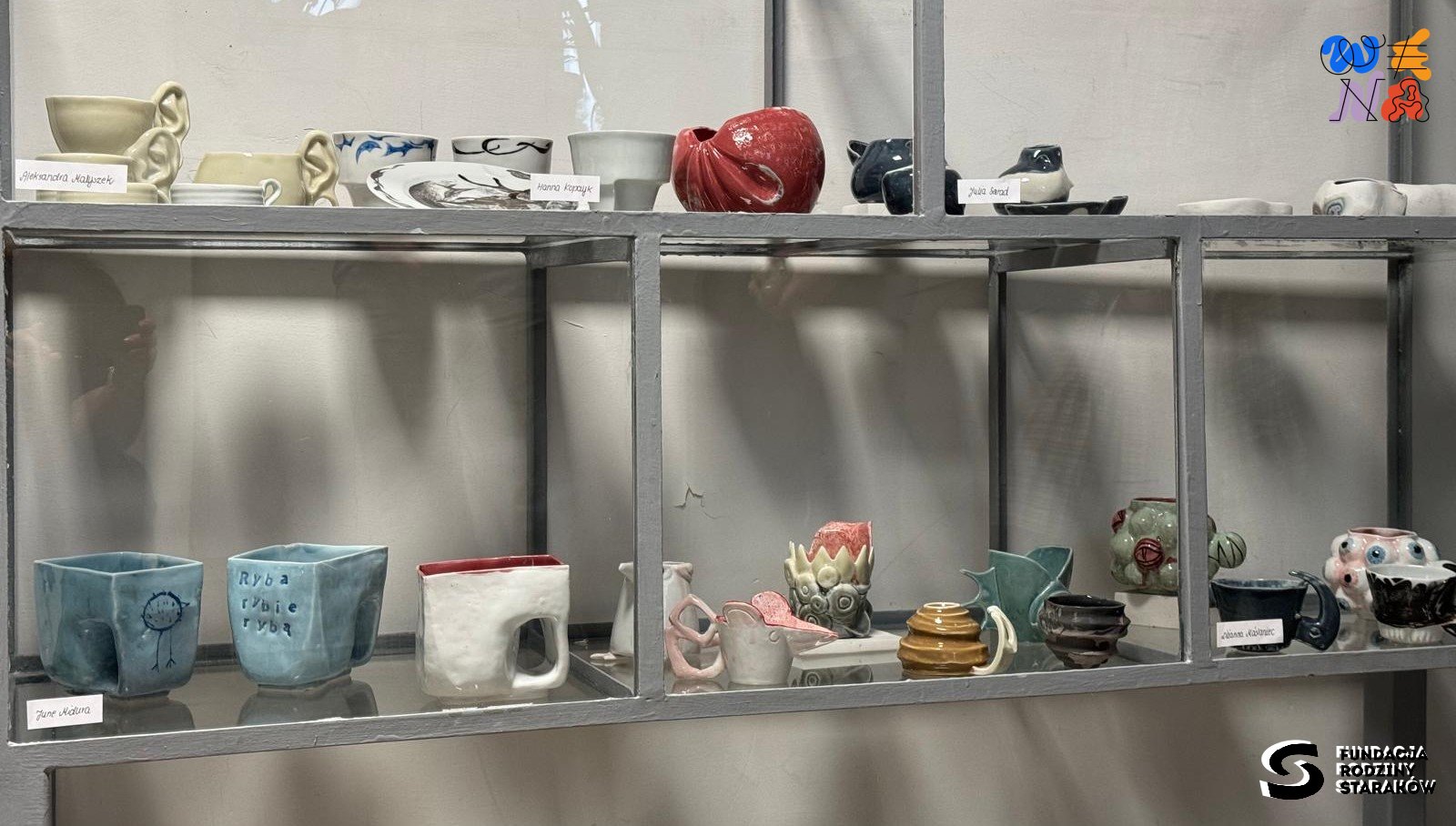
Starting from a small plate, through multiple workshops at Porcelana Ćmielów, original designer forms were finally created, enclosed in a cup, dish, goblet, mug, plate, and bowl.
The presented objects express the beauty of porcelain, its warmth, and the 'memory' recorded in the creation process. Project participants experienced all its stages, from imagining the object, through the technical design, testing its functional use, to the decorative final effect.
On April 24, 2025, at PLSP Nowy Wiśnicz, we were very warmly and kindly welcomed by the project team: Hanna Kopczyk, Matylda Krzywda, Lilianna Maślaniec, Jun Midura, Aleksandra Małyszek, Julia Sarad, Natalia Chodkiewicz, Anastazja Gierlak, Klaudia Stenzel, Zuzanna Basista, Natalia Wrona, Katarzyna Zabłocka, Zofia Malec, Kinga Wawrzeń and the supervising teachers: Aleksandra Biedka and Magdalena Potaczek-Szwed.
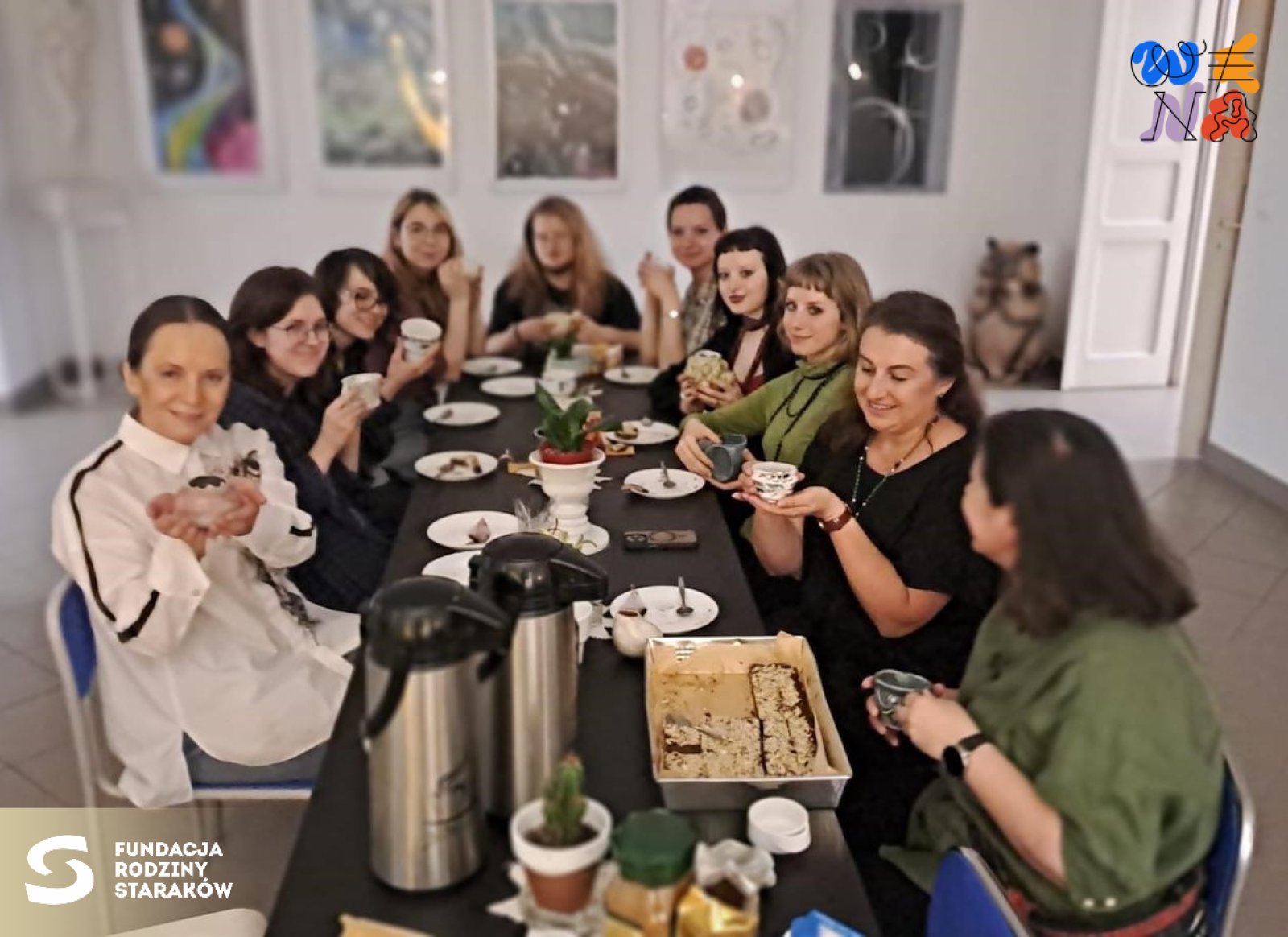
At school, warm tea awaited us, which we savored in the vessels created in the project. There was homemade cake baked by the student Lila. Conversations about searching for and creating one's own form seemed endless. The students, with great, genuine passion and an awareness of the material and the created object, talked about the process, with all its highlights and shadows. Stumbles were also incredibly educational and useful for the development of the creative path.
In the six-year history of the Grant Program Competitions 'Wena', the 'porcelain project' was the first implementation expressed in a noble material - porcelain - being a higher form of ceramics, with which students do not work within the school curriculum.
It was extremely satisfying for us that the experience gained in the course of carrying out the project paid off in diploma theses and helped students make decisions about their field of study at higher art schools.
We congratulate the entire project team and the teachers in charge on the crystallization of the boundaries of a dream!
Students participating in the project and the trip to the porcelain factory in Ćmielów: Hanna Kopczyk, Matylda Krzywda, Lilianna Maślaniec, June Midura, Aleksandra Małyszek, Julia Sarad, Natalia Chodkiewicz, Anastazja Gierlak, Klaudia Stenzel, Zuzanna Basista, Natalia Wrona, Katarzyna Zabłocka. Students who completed lithophanes without the trip: Zofia Malec, Kinga Wawrzeń. Teachers involved: Marek Biedka - project and technological support, Michał Nieć - 3D printing, Wojciech Hyży - firings. School staff: Andrzej Dominik, Jan Jarosz, Mariusz Chodór, Krystyna Ochel, Marcin Kierepka. Project partners were the Polish Porcelain Factories "Ćmielów" and "Chodzież" S.A.
LEADING TEACHER
Aleksandra Biedka, a teacher of sculpture and architectural element restoration. She has been conducting extracurricular sculpture classes for years. Recently, she started collaborating with the Polish Porcelain Factories Ćmielów and Chodzież S.A., carrying out her own sculptural projects. From this collaboration, the idea of organizing a trip to the Porcelain Factories for a group of interested students from PLSP Nowy Wiśnicz was born. Author of a project awarded in the 5th edition of the 'Wena' Grant Program Competition by the Starak Family Foundation.


